

Osteoporosis Treatment Specialist in Houston, TX
If you’re looking for specialized osteoporosis care in Houston, Dr. Ronen OB/GYN at Ronen OB/GYN offers comprehensive treatment options tailored to your specific needs. Osteoporosis can significantly impact your bone health, but with the right treatment plan, you can manage the condition and improve your quality of life. Dr. Ronen focuses on personalized approaches, combining lifestyle modifications, nutritional support, and medications to strengthen bones and prevent fractures. For more information, contact us or schedule an appointment online. Our clinic is conveniently located at 950 Threadneedle, Suite 282, Houston, TX 77079.
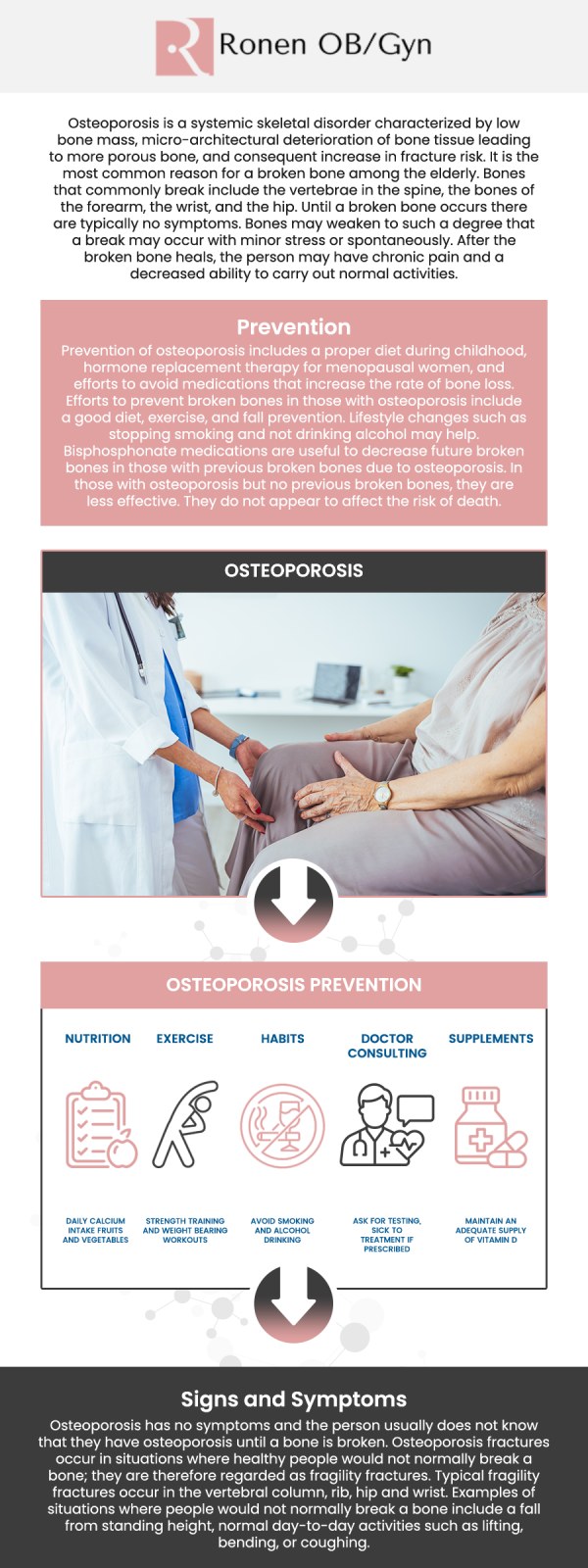
Table of Contents:
What is osteoporosis?
What are the main risk factors for osteoporosis?
How can osteoporosis be prevented?
What are the symptoms of osteoporosis?
How does Dr. Ronen’s approach to osteoporosis care differ for younger women experiencing premature menopause versus post-menopausal patients?
Osteoporosis is a condition characterized by weakened bones, making them more fragile and prone to fractures. It occurs when the bone mass decreases, and the bone structure becomes more porous. This condition primarily affects older adults, especially women after menopause, but it can develop at any age. Ronen OB/GYN provides specialized care for women at risk for osteoporosis, offering strategies to manage and prevent the condition.
Bone is a living tissue that is constantly being broken down and replaced. Osteoporosis happens when the breakdown of bone tissue occurs more rapidly than the body can replace it. This imbalance leads to a loss of bone density and strength, resulting in bones that are more likely to fracture, particularly in the hips, spine, and wrists.
Many people with osteoporosis may not show any symptoms until a bone is fractured, which is why it’s often called the “silent disease.” Regular screenings and preventative measures are important for individuals at risk.
There are several key risk factors for osteoporosis, some of which are controllable and others that are genetic or related to age and gender. One of the biggest risk factors for osteoporosis is age, as bone density naturally decreases with age. Women are at a higher risk, especially after menopause, due to the drop in estrogen levels that play a key role in maintaining bone density.
Other risk factors include a family history of osteoporosis, which may indicate a genetic predisposition. Individuals with a small body frame or low weight are also more susceptible to osteoporosis, as they have less bone mass to begin with. Additionally, certain lifestyle factors can increase risk, including a lack of physical activity, smoking, and excessive alcohol consumption, all of which can negatively impact bone health.
Dietary factors also play a significant role in osteoporosis risk. A diet low in calcium and vitamin D can lead to weakened bones. Medical conditions like rheumatoid arthritis or gastrointestinal disorders that impair nutrient absorption can increase the risk as well. Ronen OB/GYN helps women understand and manage their risk factors, offering guidance on lifestyle changes and screenings for early detection.
Preventing osteoporosis involves a combination of lifestyle changes, proper nutrition, and regular physical activity. At Ronen OB/GYN, we emphasize the importance of a balanced diet rich in calcium and vitamin D, as these nutrients are essential for maintaining bone health. Foods like dairy products, leafy greens, and fortified cereals are excellent sources of calcium, while vitamin D can be obtained from sunlight exposure and fortified foods.
Regular weight-bearing exercise, such as walking, jogging, or strength training, helps stimulate bone growth and improve bone density. Engaging in weight-bearing activities, at least three to four times a week, is crucial for building and maintaining strong bones throughout life. It’s also essential to avoid smoking and limit alcohol intake, as both of these habits can weaken bones.
For those at higher risk, such as post-menopausal women or individuals with a family history of osteoporosis, medications and supplements may be recommended by Ronen OB/GYN. These treatments can help prevent bone loss and, in some cases, may even help rebuild bone tissue. Early detection through bone density testing can also allow for more effective preventive care.
Osteoporosis is often referred to as a “silent disease” because it typically doesn’t show symptoms until a bone is fractured. Many people with osteoporosis may not experience pain or any noticeable signs until they suffer a fracture, often from a minor fall or injury. Fractures due to osteoporosis most commonly occur in the hip, spine, or wrist.
In some cases, individuals with osteoporosis may experience a loss of height or develop a hunched or stooped posture, as the vertebrae in the spine weaken and collapse. Chronic back pain, especially from a compression fracture in the spine, can also be a symptom of osteoporosis.
Because osteoporosis doesn’t always present with symptoms in its early stages, regular bone density screenings are essential, especially for women after menopause or individuals with risk factors. Ronen OB/GYN recommends early screenings to catch osteoporosis before significant bone loss occurs, allowing for early intervention and prevention of fractures.
It’s important to note that osteoporosis can be managed and treated with medication, lifestyle changes, and dietary improvements, especially when caught early. Ronen OB/GYN offers tailored care to help individuals with osteoporosis maintain their bone health and avoid the risks associated with fractures.
Dr. Ronen’s approach to osteoporosis care at Ronen OB/GYN takes into account the specific needs of both younger women experiencing premature menopause and post-menopausal patients. For younger women who experience premature menopause, whether naturally or due to medical interventions, the early loss of estrogen significantly increases the risk of developing osteoporosis. Dr. Ronen OB/GYN focuses on hormonal replacement therapy (HRT) or other treatment options to help balance hormone levels and minimize bone loss. In addition to HRT, lifestyle modifications, including diet, exercise, and calcium supplementation, are emphasized to support bone health during this critical period.
For post-menopausal women, osteoporosis prevention and treatment are focused on maintaining bone density after estrogen levels drop significantly. Dr. Ronen may recommend medications such as bisphosphonates or selective estrogen receptor modulators (SERMs) to help prevent further bone loss and improve bone strength. In addition to medications, post-menopausal women are encouraged to adopt weight-bearing exercises and ensure their diet is rich in bone-strengthening nutrients like calcium and vitamin D.
Dr. Ronen tailors treatment plans to address the unique needs of each patient, ensuring that both younger women with premature menopause and older women have access to the best possible care for managing osteoporosis and preventing fractures. For more information, contact us or schedule an appointment online. Our clinic is conveniently located at 950 Threadneedle, Suite 282, Houston, TX 77079. We serve patients from Houston, TX, Jersey Village, TX, Hunters Creek Village, TX, Katy, TX, Cinco Ranch, TX, Westside Houston, TX, and surrounding areas.
Check Out Our 5 Star Reviews


Additional Services You May Need




 Send Text
 How May I Help You?